


Top Signs Your Car Needs New Brakes
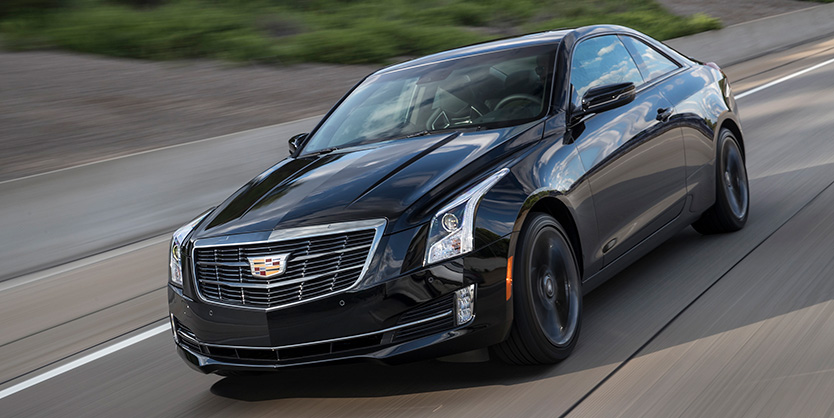
Your car’s brakes may not be something you think about often, especially when you buy a brand new car, like the Cadillac XT5. But they are one of the most important features your car has. Faulty or ill-working brakes put you and others at risk for serious accidents and injury. This being said, your car’s braking system should always be in top working condition.One good thing about your car’s braking system is that it provides audible and visible signs to warn you of trouble. If you pay attention to what your car tells you, and you take it seriously, you will be able to stay on top of any problems and avoid dangerous situations behind the wheel. Here are some of the warnings signs your car may give to alert you of brake trouble.
Sounds
When you press on the brake pedal, your brakes should bring your car to a noise-free stop. So if you are hearing sounds, like screeching, squealing or grinding, this is a common sign that your brakes are in need of attention. Here’s a closer look at that high-pitched screeching sound.
Long ago, car makers discovered a way to provide drivers with an audible warning sign to alert them when their brakes are bad – or going bad. What they did was attach a small metal indicator, called a shim, to your brakes. When your car’s brake pads have worn down to a specific point, the shim lets out an audible warning sign that sounds like a high-pitched screech. This noise is loud enough to be heard while the windows are up, and even when the radio is on at a low volume. If you hear the shim’s well-known screech, it is time to have your brakes checked and fixed. If you hear it regularly, time is running out until your brakes are no longer able to stop your car.
Reduced Responsiveness
Just as you should listen to your vehicle for signs of brake problems, you should also pay attention to how it feels while driving and stopping. One sign your car’s brakes may be in need of repairs is a brake pedal that sinks to the floor, or brakes that are not as responsive as usual. These two problems could be caused by an air leak in the brake hose or a fluid leak in the braking system. One way to tell if it’s fluid leak is by looking at the ground beneath your car. If you notice the presence of a small puddle of fluid (it will look similar to motor oil), then you may have a brake fluid leak on your hands.
Grinding/Growling
Another noise you should listen out for when stopping your car is grinding or growling. This loud, metal-on-metal sound means your brake pads have been completely worn down and are beyond replacement. This can result in damaged rotors, a problem that will need to be repaired in order for your car’s brakes to return to good working condition.
Pulling
Have you noticed your car pulling to one side when behind the wheel? This could be as sign that your wheels need to be aligned, but if your car pulls to one side while braking, then the trouble lies in your braking system. A pulling car can be due to brake linings wearing unevenly, or to foreign matter being in the brake fluid. Depending on the specific problem, your car may need a brake adjustment, or to have its brake fluid drained and replaced.
For all your automotive needs, visit our dealership in Mechanicsburg, PA.
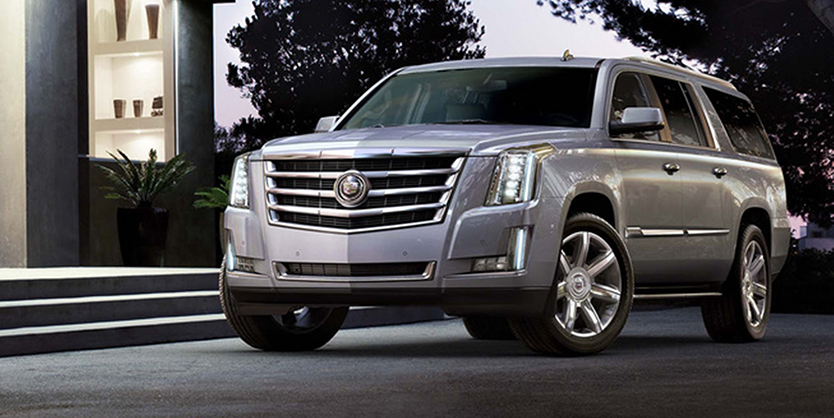
The Escalade. It’s known for its large size, bold styling, and luxury Cadillac nameplate. And for 2017, the Escalade continues to impress with its stand-out power, upscale interior with gobs of luxury items, and impressive towing abilities that can’t be matched by competitors. But, even the biggest and baddest vehicles can suffer from automotive trouble. So what can you do to keep problems away? The answer – with regular maintenance. Here are the most important maintenance services you should provide for your 2017 Escalade.
Change Oil
For an automotive engine to run smoothly and efficiently, it needs oil. Oil acts as a lubricant and works to keep all engine parts running properly. Over time, oil becomes dirty and contaminated due exhaust gasses emitted from the cylinders. Another problem is that heat from the engine breaks down oil, reducing its viscosity (thickness). Oil that is dirty or becomes too thin is unable to lubricate the engine as well as it should, which can lead to engine damage. The solution to this is to service your car with regular oil changes to provide your engine with a continuous supply of clean, fresh oil. Cars today can typically go 5,000 to 10,000 miles between oil changes. But, of course, driver habits, the elements driven in, etc. play a role in when oil should be changed. To get a more accurate estimate, check your owner’s manual or ask a professional mechanic.
Replace Air Filter
Your car’s engine may not have a set of lungs like you do, but it requires air to function just the same. This poses a question: how does an engine “breathe”? With the help of an air filter, of course. An air filter is used to catch any dirt, dead bugs, leaves, trash, and other debris from being sucked up into the engine block. By acting as a blocker against these things, the engine is provided a clean and fresh supply of oxygen. Unfortunately, air filters can become dirty and clogged, making it impossible for air to get through to the engine. As a result, the engine can’t “breathe”, is starved of oxygen, ad faces problems such as overheating and serious damage. A clogged air filter has many other negative consequences, too, like reduced gas mileage and horsepower. It can also cause your engine to run rough and stall out. So how often should the air filter be replaced? There is no definite answer to this question, because it depends on two main factors: how many miles you drive per year and the atmospheric conditions during those miles. For instance, if you often drive on rural dirty roads, you will need to change your air filter more often.
Inspect Tires
Tires are one of the most important safety features of a car, yet they are also one of the most ignored. Go figure, right? Tires should be checked regularly for proper air pressure, excessive wear and tear, poor treads, and other signs of damage. Treads are one of the most important elements of a tire. Their purpose is to grip the road. Without them, your car would slip all over the road – especially in wet, icy or snowy conditions. As tires age and gain wear and tear, tire treads eventually wear out, decreasing traction and safety. To ensure tread depth is at a safe level, you should check all of your tires every month or so, and be sure to also check the spare.
For all your automotive needs, visit our dealership in Mechanicsburg, PA.
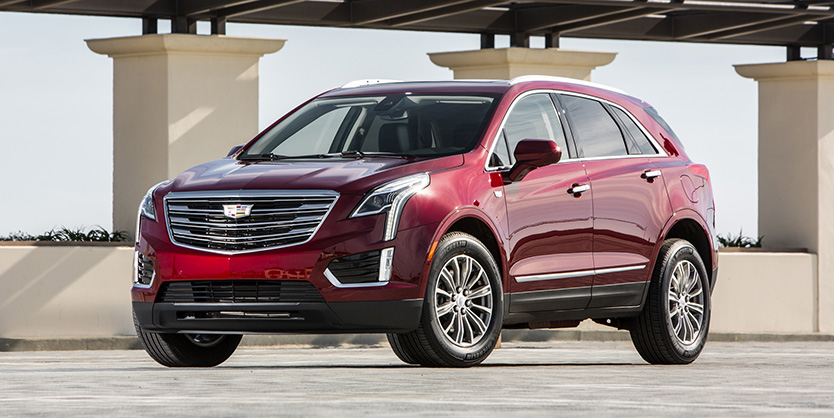
If you’re shopping for a compact SUV, chances are you are scratching your head about which one you should pick from the mega list of available choices on the market. Let us make your decision easier with a look at the 2017 Cadillac XT5 – a compact SUV that is full of all the most sought-after qualities. What are they you ask? Continue reading to find out!
An Over-The-Top Base TrimFor 2017, the Cadillac XT5 shows off a stand-out lineup that features four trim levels – all jam-packed with luxury content. But when it comes to this lineup, there is one trim that is truly impressive, and it’s the XT5 base trim.
While many entry-level trims scrape by with just the bare minimum, the XT5 base trim offers a generous helping of upscale content. This over-the-top trim comes with stellar items, such as:
- Automatic headlights
- LED daytime running lights
- Power rear liftgate with memory height
- Dual-zone automatic climate control
- Keyless ignition and entry
- Remote engine start
What’s even more impressive about the XT5 base trim is its mega list of tech features that make the XT5 a hotspot for entertainment and safety systems. Inside this trim, you’ll find:
- 8″ central touchscreen with CUE infotainment interface, voice commands, Apple CarPlay and Android Auto smartphone integration
- OnStar emergency telematics with 4G LTE connectivity and WiFi hotspot capability
- GM’s wireless device charging
- Bose 8-speaker sound system with satellite radio, four USB ports and an auxiliary input jack
Optional Add-OnsWhen offered extra perks, it can be pretty exciting – especially when it makes buying a new car even better. The XT5 boasts several optional add-ons that increase its overall appeal. One XT5 trim, in particular, that boasts many optional add-ons is the Luxury trim. Items available to this trim, include:
- Ventilated front seats
- Heated outer rear seats
- 3-zone climate control
- Navigation system with 14-speaker Bose stereo
- Towing package
If you want to increase safety in the XT5, there are two available packages up for grabs: the Driver Awareness package and the Advanced Security package.
The Driver Awareness package comes with a number of advanced safety features, such as:
- Forward-collision alert and mitigation with automatic braking and pedestrian detection
- Lane-departure warning and intervention
- Automatic high-beam LED headlights
Opting for the Security package means even more safety features with the inclusion of a movement-sensing alarm, locking steering wheel, door lock and latch shields, and locking wheel lugs.
Another optional package that equips the XT5’s Premium Luxury trim with even more safety features is the Driver Assist package, which comes with adaptive cruise control, an enhanced collision mitigation system, and an automatic parking system.
A Smooth and Powerful RideIn keeping with its luxury content, the 2017 XT5 also provides a luxury ride that’s smooth and powerful. Wheels are large, yet compliant, bumps are kept at bay, and there is an overall sharpness when behind the wheel that makes driving an engaging experience.
Power in the XT5 falls into the hands of its 3.6-liter V6 engine that’s paired to an eight-speed automatic transmission. Producing 310 horsepower and 271 pound-feet of torque, the XT5 provides a good bit of oomph that makes driving fun.
Compact SUVs aren’t typically known for their towing capabilities, but with a strong powertrain and the help of an optional trailering package, the XT5 can tow up to 3,500 pounds, which is quite impressive for an SUV of its size.
While many SUVs rank rather poor in fuel economy, the 2017 XT5 ranks very efficient. How you ask? With the help of its automatic engine stop-start feature that helps save fuel at stoplights.
Impressed with what you’ve learned so far about the 2017 Cadillac XT5? So are we! To learn more about this must-have compact SUV, check it out with us at our dealership in Mechanicsburg, PA.
Top Driving Mistakes to Avoid This Winter
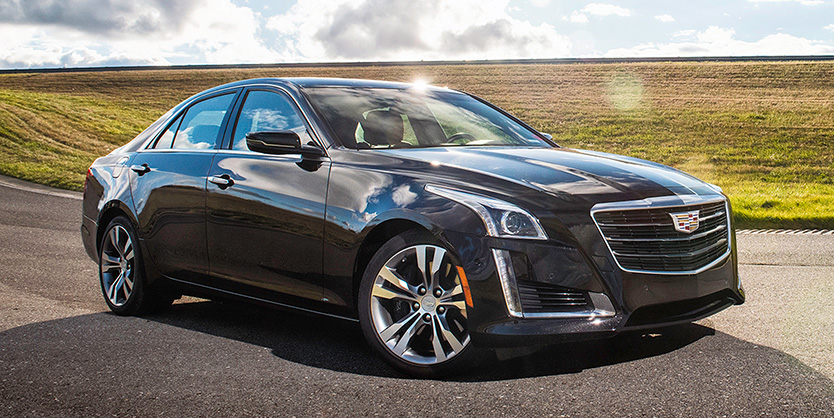
You’re driving along in your brand new 2017 Cadillac CTS. Its heated seats are keeping you warm and toasty in the wintry weather, and one of your favorite songs is on the radio, when before you realize what’s happening, your tires slip on a patch of ice and you find yourself not driving – but sliding – downhill, unable to stop. Luckily, this time you didn’t get injured and your car is scratch-free. But next time, you may not be so fortunate. To keep you and your ride safe during treacherous winter conditions, here are the most common driving mistakes to avoid.
Assuming 4-Wheel Drive Will Keep You SafeMany vehicles come with standard or optional four-wheel drive. While cars with four-wheel drive usually do perform better in snowy, icy conditions than those without it, this technology has a way of giving many drivers a false sense of security. Don’t fall into the trap! Four-wheel drive is used to send the specific amount of power needed to each of your car’s tires. The purpose of this is to provide your wheels with extra traction so you can move forward through snowy roads more easily. But be warned, this does not mean your car is invincible when battling winter weather. While four-wheel drive can help you get through certain difficult situations presented by cold weather, it does not give you the required traction to stop, so always use safe winter driving techniques to avoid problems.
Being Poorly PreparedDid you know, the most dangerous day to drive is the day after the first snowstorm? This is due to the fact that drivers haven’t prepared their cars for the wintry weather, and also because they’ve somewhat forgotten some of their snow-driving techniques during the stretch of good weather in spring and summer. Before winter even begins, it’s a good idea to prep your car for the cold months ahead. This means inspecting your tires, checking your antifreeze levels, and so on.
Inspecting your tire treads is one of the best ways to prep your car for winter. The treads of your tires are what makes traction with the road possible. Without it, you are put at an increased risk of slipping and other dangerous situations. For optimal safety, tires should have at least a 6/32-inch (4.8 millimeter) tread depth. It is also a good idea to consider the type of tires your car should be equipped with in winter. While all-season tires are designed to handle most driving conditions, if you live in an area that gets hit with a lot of snow, it could be a good idea to invest in snow tires for better traction and safety.
Just as you should prepare your car for winter, you should also prepare yourself for potentially dangerous situations. A good way to do this is to store helpful items, like a snow shovel and kitty litter/sand in your trunk in case you get stuck in the snow. Other useful supplies, include:
- Flares
- Flashlight
- Snow scraper
- Snacks and bottled water
Slamming on BrakesIce and snow cause slippery conditions. When tires start to slip, many panic and slam on the brakes in order to correct the problem. Unfortunately, this makes the situation worse. Instead of stopping your car from slipping, it actually causes traction to be removed from your tires. As a result, the ability to control your vehicle is taken away. During a slip, your tires have lost traction with the road and your wheels have become locked, so slamming on the brakes won’t do anything to fix the situation. Here’s what you should actually do. If you feel your tires begin to skid, ease off the accelerator and let your car slow down on its own. This will allow any potential tire traction there may still be allow you to steer yourself out of a crash.
For all of your automotive needs, we can help! Drop by our dealership, located in Mechanicsburg, PA.
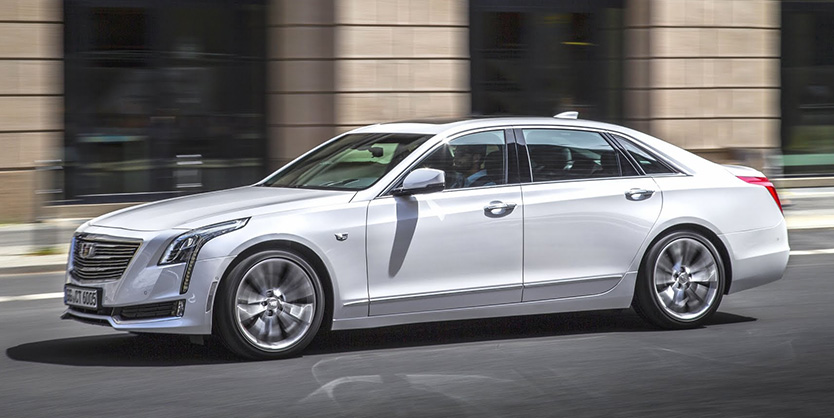
The 2017 Cadillac CT6 offers jaw-dropping styling, a spacious interior, and great power and fuel efficiency. Plus, with its ability to engage drivers, it is actually quite fun behind the wheel. But, there’s more to buying a new car than the perks its provides. You also need to keep it in great condition so it will provide you with a smooth, trouble-free ride for years to come. So what can you do to make this happen? The answer: get regular maintenance services. For the top three maintenance services your CT6 needs most, continue reading.
Change Oil
As you’ve most likely heard a million times since first learning how to drive, it’s that oil changes are crucial to the survival of your car. We’re here to tell you that this bit of information is absolutely true! Regular oil changes are one of the most important things you can do to keep your car’s engine in good condition. Ignoring this easy service will lead to many problems, like an overheating engine and even engine damage, which can lead to big bucks spent on repairs.
Motor oil acts as a lubricant and is used to lubricate the internal parts of your car’s engine. Without a continuous supply of clean, fresh oil, these internal parts can become damaged, leading to permanent engine trouble. Most vehicle’s can go 5,000 miles between oil changes, but there are a number of factors to consider, like what type of environment you drive in and how often you drive. For the best answer to when your car needs to have its oil changed, seek the help of a professional technician.
Replace the Air Filter
Did you know, that just like you need a continuous supply of air in order to function, so does your car? It’s true. Without a constant flow of air, your engine runs the risk of overheating and suffering expensive damage. In order to provide your car’s engine with the clean, unrestricted air supply it needs to thrive, it gets help from an air filter. The air filter works by blocking all outside junk, like bugs, dirt and debris from being sucked into the engine. But just like most everything, air filters have a lifespan. Over time, as they collect more and more junk, they become dirtier and dirtier. Eventually, they will become so dirty, they will become clogged. As a result, the engine is starved of oxygen. To diminish the chance of a clog, have your air filter changed regularly so your engine will have the continuous airflow it needs.
Check for Leaky Hoses
From oil to antifreeze, a leaky car is a sign of trouble and should be fixed as quickly as possible. One reason for a leaky car is due to hose problems. Because of the intense heat and pressure under the hood of your car, engine hoses can become cracked and fail. The best way to ward off hose failure is to regularly check them for signs of problems. This can be done by yourself or with the help of a professional. Simply pop the hood of your car and perform a visual inspection on them.
For more information on the 2017 Cadillac CT6 and automotive maintenance services, visit our dealership in Mechanicsburg, PA.
Top Driving Don’ts for On-Road Safety
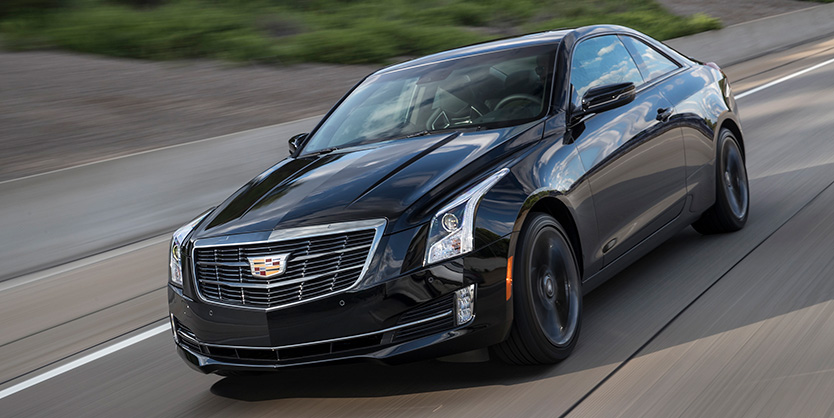
There are good drivers and bad drivers. Safe vehicles and not so safe vehicles. While using advanced safety features help increase safety on the road, most car accidents are due to human error. In order to protect you and your passengers, check out our list of top driving don’ts.
Don’t Forget to Buckle UpSeat belts save lives – it’s a fact. When worn correctly, they have the ability to prevent you from being thrown around or flung from a vehicle during a crash. This is even true during low-speed crashes. Statistics have revealed that over half of all accident fatalities happened to those who weren’t wearing their seat belts. The number of crash fatalities due to a lack of seat-belt are even higher (70%!) for passengers between the ages of 13 and 15. If these stats scare you, then don’t forget to buckle up!
Don’t Drive DrunkYou’ll hear it time and time again, long before you are even of drinking age, to never drive drunk. It may be common sense and something you swear you’ll never do, but alcohol has the power to make you do things you shouldn’t and wouldn’t normally do. It is estimated that 30 percent of all automotive accident fatalities in the U.S. involve drivers impaired by alcohol.
Alcohol causes a number of problems that can lead to accidents on the road. At low blood-alcohol levels, intoxication causes:
Slowed reaction timesDecreased coordinationLowered inhibitionsAt higher levels, it can also cause blurred or double vision, and loss of consciousness.
To avoid dangerous, even deadly situations, it’s simple – don’t drive drunk. Instead, ask a sober friend for a ride or call an Uber.
Don’t Get DistractedDistractions are a part of life, especially with all of the smartphones and tech gadgets that absorb our daily lives. You may be the best multi-tasker in the world, but distractions behind the wheel of a car pose a very dangerous threat to the safety of yourself and others. One of the biggest causes of distractions while driving is cell phone use. Whether talking or texting, using a cell phone behind the wheel can delay reaction times by up to 20 percent.
But, it’s not just cell phones that are causing dangerous distractions on the road. Eating, interacting with passengers, applying makeup and handling other electronic devices all divert attention away from the road. To help avoid on-road distractions, keep your smartphone out of reach and your electronics away.
Don’t SpeedAs a whole, drivers are impatient behind the wheel. This is a problem that results in driving too fast and too reckless. Speeding is very dangerous and can lead to serious consequences, like expensive tickets and fatal collisions. While you may think that going faster will save you time, chew on this: for every 10 mph faster you drive, your risk of a car crash increases by as much as 50 percent – and you’ll only manage to get to your destination a few short minutes sooner. Don’t risk it. Take your time and obey the speed limit.
Don’t TailgateOne of the most dangerous things to do behind the wheel of a car is driving too closely to the vehicle in front of you. This is called tailgating and is an easy way to get into an accident. Drivers need enough time to react to the maneuvers of the car ahead in case they make a sudden turn or stop. Following too closely can lead to an inability to stop in time, a problem that will quickly cause an accident.
A good rule to follow in order to avoid tailgating is to leave two car lengths between your car and the car ahead of you. If driving at night or in poor weather conditions, be sure to increase space from two lengths to four.
For more automotive tips and tricks, we can help. Visit our dealership in Mechanicsburg, PA.
Connect with us

Categories