


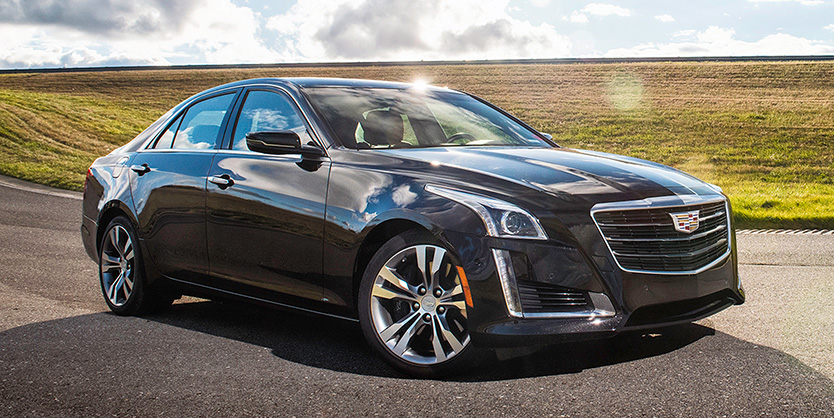
You’re driving along in your brand new 2017 Cadillac CTS. Its heated seats are keeping you warm and toasty in the wintry weather, and one of your favorite songs is on the radio, when before you realize what’s happening, your tires slip on a patch of ice and you find yourself not driving – but sliding – downhill, unable to stop. Luckily, this time you didn’t get injured and your car is scratch-free. But next time, you may not be so fortunate. To keep you and your ride safe during treacherous winter conditions, here are the most common driving mistakes to avoid.
Assuming 4-Wheel Drive Will Keep You SafeMany vehicles come with standard or optional four-wheel drive. While cars with four-wheel drive usually do perform better in snowy, icy conditions than those without it, this technology has a way of giving many drivers a false sense of security. Don’t fall into the trap! Four-wheel drive is used to send the specific amount of power needed to each of your car’s tires. The purpose of this is to provide your wheels with extra traction so you can move forward through snowy roads more easily. But be warned, this does not mean your car is invincible when battling winter weather. While four-wheel drive can help you get through certain difficult situations presented by cold weather, it does not give you the required traction to stop, so always use safe winter driving techniques to avoid problems.
Being Poorly PreparedDid you know, the most dangerous day to drive is the day after the first snowstorm? This is due to the fact that drivers haven’t prepared their cars for the wintry weather, and also because they’ve somewhat forgotten some of their snow-driving techniques during the stretch of good weather in spring and summer. Before winter even begins, it’s a good idea to prep your car for the cold months ahead. This means inspecting your tires, checking your antifreeze levels, and so on.
Inspecting your tire treads is one of the best ways to prep your car for winter. The treads of your tires are what makes traction with the road possible. Without it, you are put at an increased risk of slipping and other dangerous situations. For optimal safety, tires should have at least a 6/32-inch (4.8 millimeter) tread depth. It is also a good idea to consider the type of tires your car should be equipped with in winter. While all-season tires are designed to handle most driving conditions, if you live in an area that gets hit with a lot of snow, it could be a good idea to invest in snow tires for better traction and safety.
Just as you should prepare your car for winter, you should also prepare yourself for potentially dangerous situations. A good way to do this is to store helpful items, like a snow shovel and kitty litter/sand in your trunk in case you get stuck in the snow. Other useful supplies, include:
- Flares
- Flashlight
- Snow scraper
- Snacks and bottled water
Slamming on BrakesIce and snow cause slippery conditions. When tires start to slip, many panic and slam on the brakes in order to correct the problem. Unfortunately, this makes the situation worse. Instead of stopping your car from slipping, it actually causes traction to be removed from your tires. As a result, the ability to control your vehicle is taken away. During a slip, your tires have lost traction with the road and your wheels have become locked, so slamming on the brakes won’t do anything to fix the situation. Here’s what you should actually do. If you feel your tires begin to skid, ease off the accelerator and let your car slow down on its own. This will allow any potential tire traction there may still be allow you to steer yourself out of a crash.
For all of your automotive needs, we can help! Drop by our dealership, located in Mechanicsburg, PA.
Connect with us

Categories